

Investigator meetings are an important opportunity to bring clinical trial investigators and study teams together around a shared understanding of the protocol, study objectives and expectations for trial execution. But an effective investigator meeting should do more than simply communicate information.
When planned well, the meeting gives investigators an opportunity to ask questions, discuss potential challenges, learn from one another and engage directly with the sponsor and study team. It can also provide the sponsor with valuable insights into how the protocol may translate into clinical practice across different institutions, patient populations and geographies.
After planning and supporting investigator meetings across therapeutic areas and stages of clinical development, I've found that the most successful meetings combine strong scientific content with thoughtful engagement and seamless execution.
Here are seven considerations for planning an effective investigator meeting.
1. Start With Clear Investigator Meeting Objectives
Before developing an agenda or presentation deck, define what the meeting needs to accomplish.
Protocol education is typically a central objective, but consider what else investigators should understand, discuss or be prepared to do when they leave the meeting. Are there aspects of study design that require additional context? Potential recruitment or enrollment challenges? Complex eligibility criteria? New procedures or endpoints? Operational considerations that may differ across sites or regions?
Clear objectives should drive the agenda, content and meeting format.
They also help prevent a common problem: trying to fit too much information into the meeting simply because multiple internal teams have access to the agenda.
Every session should have a reason for being there.
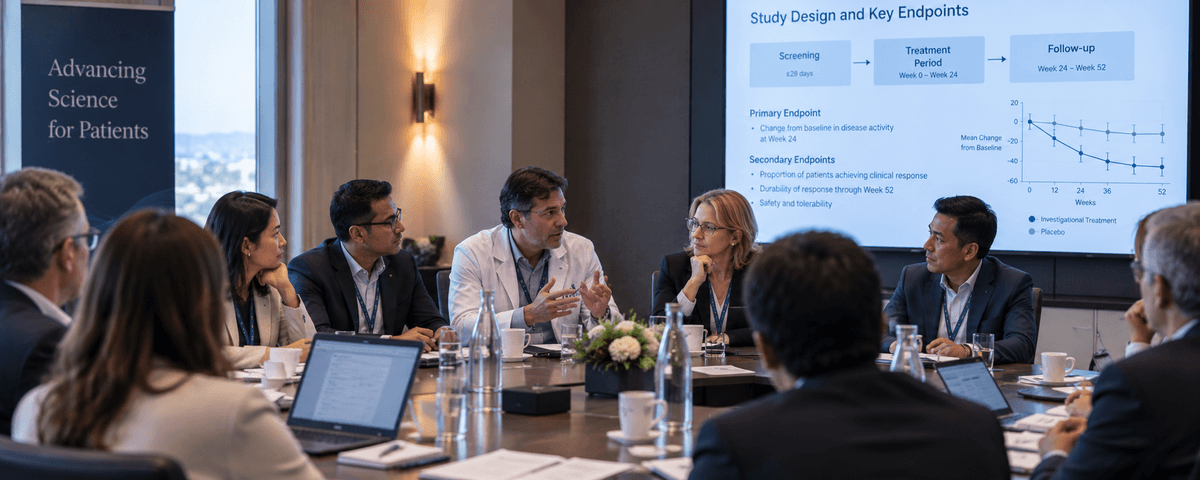
2. Build the Agenda Around the Investigators
An investigator meeting shouldn't feel like a sequence of internal presentations delivered to an external audience.
Think about the meeting from the investigator's perspective. What do they need to understand to execute the study successfully? Where are they likely to have questions? Which topics require discussion rather than presentation?
The agenda should balance necessary scientific and operational content with opportunities for investigators to participate.
This may include facilitated discussions, Q&A, case-based exercises, breakout sessions or opportunities to explore specific aspects of the protocol in smaller groups.
And don't underestimate the value of breaks and informal interaction. Investigators are also learning from one another, particularly when a study brings together experts from different institutions or regions.
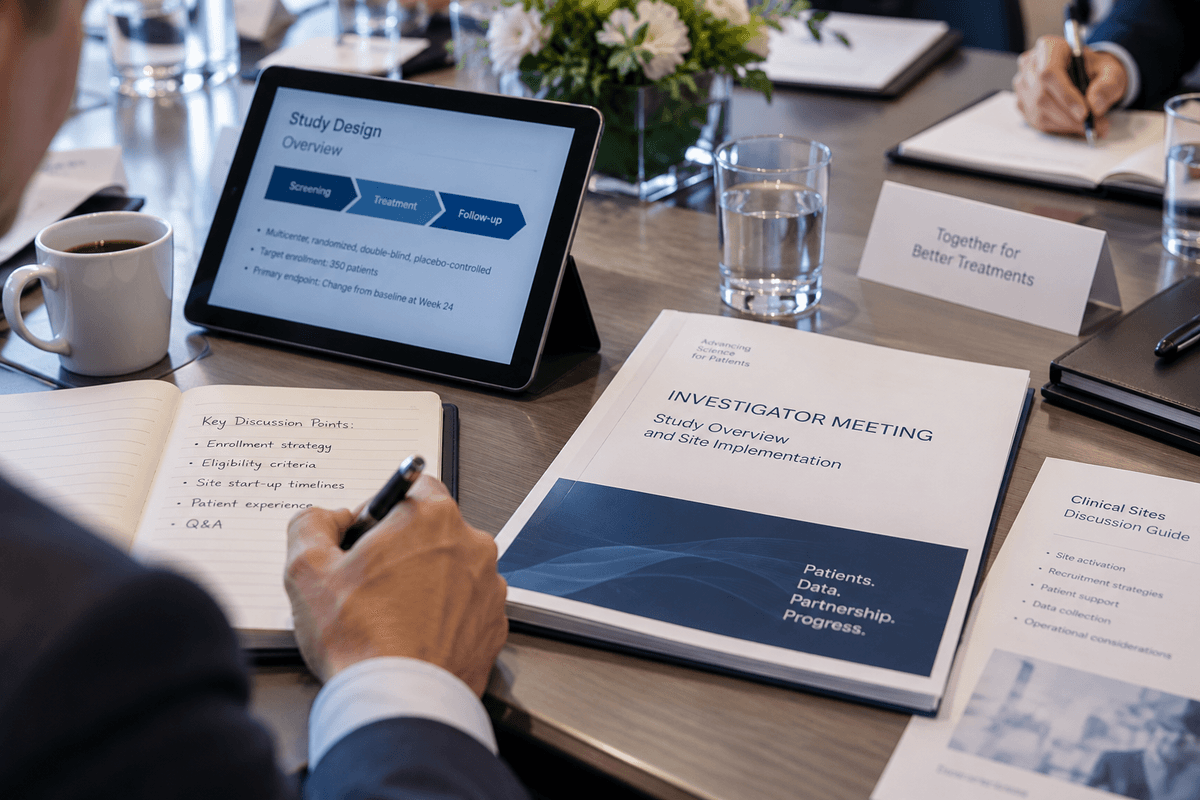
3. Develop Content That Encourages Discussion, Not Just Presentation
There is a lot of information to communicate at an investigator meeting. The temptation is to put all of it on slides.
More slides don't necessarily create more understanding.
Meeting content should be scientifically rigorous, accurate and appropriately detailed, but it should also help facilitate discussion. Focus presentations on the information investigators need most and identify areas where their questions and perspectives could benefit the broader study team.
When possible, use clinical scenarios, polling, cases or discussion questions to make the content interactive.
The goal isn't simply to get through the deck. It's to make sure investigators leave with a clear understanding of the study and are prepared to implement it successfully at their sites.
4. Prepare Faculty and Internal Teams
A strong agenda and good content can still fall flat if presenters aren't prepared.
Faculty preparation should begin well before the investigator meeting. Review presentations for scientific accuracy, consistency and flow, and make sure individual sessions support the broader meeting objectives.
Rehearsals are particularly important when multiple presenters are involved. They help identify repetitive content, gaps between sessions, timing problems and questions that may arise during the meeting.
Presenters should also understand their role beyond delivering slides. They need to be prepared for discussion, questions and, when appropriate, candid feedback from investigators.
A well-rehearsed meeting doesn't need to feel scripted. In fact, good preparation often creates more room for meaningful discussion because the meeting team is confident enough to adapt when the conversation warrants it.

5. Design the Meeting for Investigator Engagement
Engagement shouldn't be something added to the agenda at the end. It should be considered throughout the meeting design.
Large-group discussion may work well for some topics, while smaller breakout groups can encourage participation when more detailed feedback is needed. Polling can quickly identify differences in practice patterns or perspectives. Case-based exercises can help investigators work through how aspects of the protocol may apply in real-world clinical situations.
The format should always serve the objective. Interactive doesn't automatically mean effective.
Good facilitation matters as well. Investigators should have opportunities to contribute without allowing a small number of voices to dominate the discussion.
This is particularly important for global investigator meetings, where differences in clinical practice, healthcare systems and patient populations can surface perspectives that may not otherwise be apparent.
6. Get the Logistics and Meeting Experience Right
The science is central, but poor execution can quickly distract from it.
Travel, transportation, venue selection, registration, audiovisual support, room configuration, food and meeting materials should all work seamlessly in the background.
The physical setup matters, too. A room designed entirely around presentation may not work well if the agenda calls for significant discussion or breakout activity. Think about how investigators will interact with faculty, the study team and one another when determining the meeting configuration.
The investigator experience begins before they enter the meeting room. Clear communication, organized travel arrangements and thoughtful hospitality demonstrate respect for their time and allow them to focus on the purpose of the meeting once they arrive.
For global meetings, additional considerations such as travel distance, time zones, language and regional differences should be incorporated into planning from the beginning.
7. Capture Insights and Follow Up After the Meeting
The investigator meeting isn't over when the final session ends.
Throughout the meeting, capture important questions, recurring themes, operational concerns and areas that require follow-up. Some may need an immediate response, while others may warrant additional discussion within the study team.
Afterward, determine what needs to be communicated back to investigators and sites. Follow-up may include answers to outstanding questions, meeting materials, clarification of study procedures or other resources identified during the meeting.
The insights gathered can also help the sponsor understand where investigators may need additional support as the study progresses.
Closing the feedback loop demonstrates that investigator questions and perspectives were heard and helps maintain engagement beyond the meeting itself.
From Meeting Planning to Study Engagement
An effective investigator meeting brings together science, strategy, engagement and execution.
The strongest meetings don't simply transfer information from sponsor to investigator. They create an environment where investigators understand the study, can raise meaningful questions, exchange perspectives with their peers and leave prepared to execute the protocol successfully.
That requires thoughtful planning at every stage, from defining objectives and developing content to faculty preparation, meeting logistics, facilitation and follow-up.
SBHC partners with pharmaceutical and biotech clinical development teams to plan and execute investigator meetings from strategy through execution, including agenda and content development, investigator communications, faculty preparation, meeting logistics, onsite support, facilitation, meeting minutes and post-meeting follow-up.
Planning an upcoming investigator meeting? Let's talk.